Description
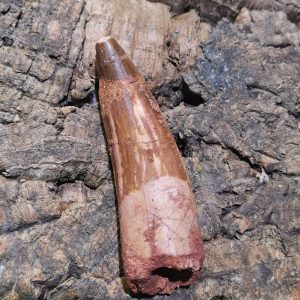
- Mosasaur Tooth (Large)
- Species: Mosasaurus beaugei
- Age: Cretaceous, 66 Million Years Old
- Source: Morocco
- Size: Approx 40-60mm
- Quality will vary, one supplied, not exact one pictured.
Mosasaurs were large marine reptiles that lived approximately 98 to 66 million years ago during the Late Cretaceous period. They were apex predators that dominated the oceans, preying on all manner of marine life, including other aquatic reptiles, fish and even sharks. Mosasaurs closest living relatives are monitor lizards sharing many similar features, such as a elongated narrow flexible jaw and sharp curved teeth. However they grew far larger than any monitor lizard alive today reaching lengths of up to 15 meters (50 feet). The largest of which, like Tylosaurus and Mosasaurus, grew to be the largest marine predators of their time.
These teeth were collected from phosphate beds in Morocco; large areas of sedimentary rock that made up the seafloor of the Tethys Sea in the Cretaceous period. These have yielded some of the best mosasaur fossils in the world, including nearly complete skeletons of Mosasaurus, Prognathodon, and other genera. Taxonomic classification of ancient extinct species can be complicated; Mosasaurus beaugei is one of five species split off from M. hoffmanni, however some palaeontologists still consider it to be a synonym of hoffmanni. It is estimated that M. beaugei grew to a total length of 8–10 meters and their skulls made up 1 meter (3.3 ft) of their total length.