Description
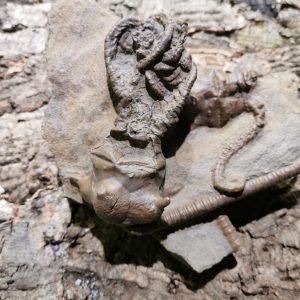
- Trilobite Fossil
- Species: Dicranurus monstrosus
- Age: Middle Devonian, 380 Million Years
- Source: Morocco
- Size: 140mm
- Image shows exact item received.
Trilobites are one of the most iconic and widely studied fossils in palaeontology. A family of extinct marine arthropods; trilobites appeared in the Cambrian period over 500 million years ago and thrived for more than 270 million years before going extinct at the end of the Permian. Fossils of these isopod-like creatures have been found in many countries all across the world, clearly indicating their presence in the Earths ancient oceans and the evolutionary success of these early arthropods. Trilobites are recognisable by their segmented bodies, articulated exoskeletons, and diverse morphological features.
This Trilobite fossil was found in Morocco. Morocco is world-renowned for its fossil trilobites, particularly those from the Devonian period. The Anti-Atlas Mountains in particular are abundant with trilobite fossils and are known for producing some of the highest quality specimens. A huge array of species have been discovered, remarkably preserved showing all their intricate details: spines, eyes, body segments, etc.
Dicranurus monstrosus was an impressive looking trilobite that lived in the an ancient shallow sea that stretched between the continents Euramerica and Gondwana; this is now modern day Oklahoma, New York and Morocco. The largest individuals found measure 20 to 30mm in body length, though their spiny adornments increased their size by a further 10 to 20mm. It is believed these spines were to protect these animals from predation by marine predators like Placoderms, an ancient fish species that has been identified from fossils found in the same area. Dicranurus can be distinguished from similar Trilobites by their large curled horns that grow behind the head. It is these horns that give the genus its name, Dicranurus comes from the Greek word dikranon which means ‘pitchfork’.