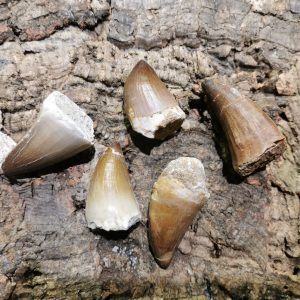
Description
- Mammoth Tooth
- Species: Mammuthus primigenius (Woolly Mammoth)
- Age: 20,000-40,000 years old
- Source: North Sea
- Size: 12cm
- Image shows exact item received.
The name Mammoth refers to any members of the extinct elephant genus Mammuthus; which lived from the late Miocene approximately 6.2 million years ago into the Holocene, around 4,000 years ago. Mammoths spread from Africa, to Europe, Asia and North America. In general they were incredibly similar to modern day elephants, though were more closely related to Asian Elephants than modern day African elephants. Mammoths could be distinguished from their modern cousins by their incredibly large spiral tusks and many had thick fur as an adaptation to cold environments.
The most recognisable species of Mammoth is the Woolly Mammoth (Mammuthus primigenius) which evolved 700 to 400,000 years ago and survived right up to as recently as 4000 years ago, still extant during the rise of early human civilisation in Ancient Egypt. Woolly Mammoths are one of the best studied prehistoric animals because of the numerous frozen carcasses that have been found, as well as skeletons, teeth, stomach contents, dung, and ancient human drawings in the form of prehistoric cave paintings.
Woolly Mammoths were around the same size as modern day African Elephants; with males reaching 3.5m at the shoulder and weighing 4 to 8 tons; and females being up to 2.6m and between 2.5 and 4 tons. Their name comes from their thick layer of fur with an outer coating of long guard hairs, this allowed them to survive incredibly cold environments during glacial periods such as the last ice age. The ears and tail were small in comparison to their large size, when compared to elephants, in order to minimise frostbite and heat loss. They had long tusks in the upper jaw and four large molars, which were dropped and replaced six times during the animals life. This shedding of teeth, along with their density and size means they are one of the most common mammoth fossils found.
This mammoth tooth was found during dredging of the North Sea between the UK and Europe, in an area often referred to as Doggerland. This area was identified as an area of archaeological potential when in 1931 the antler of a deer dating back to the Ice Age was found by a fishing trawler. Vessels have since dragged up remains of mammoths, lions and other animals, as well as prehistoric tools and weapons from ancient humans.