Description
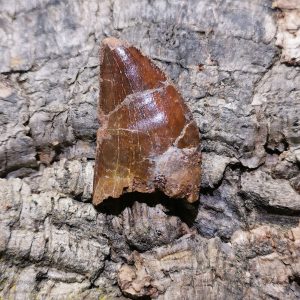
- Mako Shark Tooth
- Species: Isurus hastalis
- Age: Miocene, 25 to 2.5 Million Years Old
- Source: USA
- Size: 20-60mm
- Quality will vary, one supplied, not exact one pictured.
Fossilised shark teeth are a relatively common occurrence, and due to the soft cartilaginous bones of sharks; they are the most common evidence of prehistoric sharks. However, fossilised vertebrae, fin spines, and even impressions of soft tissue have also been found, offering glimpses into their biology and evolution. Sharks are arguably the Earth’s most successful groups of predators, having been around for over 400 million years. They have lived through various geological periods, survived mass extinctions that wiped out most other large predators and continuously adapted and thrived in different marine environments.
Isurus hastalis, sometimes called Cosmopolitodus hastalis, is an extinct species of Mako Shark that lived between 30 and 1 million years ago during the Oligocene and Early Pleistocene. Commonly referred to as the Broad-Tooth Mako, it’s teeth can reach up to 9cm in length and fossils of them have been found worldwide, suggesting a broad distribution. By studying fossil teeth and jaws and comparing them to modern day relatives; scientists estimate this shark grew to a large size of up 7m in total length, larger than the modern day Great White Shark.