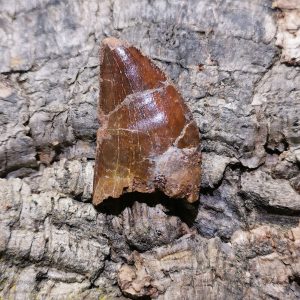
Description
- Fossilised Crinoid (Sea Lily)
- Species: Mahoumacrinus sp.
- Age: Devonian Period, Approx 360–390 Million Years Old
- Source: Morocco
- Size: Approx 290x210mm (including matrix)
- Exact item pictured
This specimen is a fossilised crinoid, commonly known as a sea lily, from the genus Mahoumacrinus. Crinoids are echinoderms related to modern sea stars and sea urchins and have existed in Earth’s oceans for hundreds of millions of years. During the Devonian Period, they were especially abundant and formed an important part of marine ecosystems.
Mahoumacrinus lived attached to the seafloor by a stalk, using its crown of feather-like arms to filter plankton and organic particles from the water. The body was supported by numerous calcite plates, which could become preserved when buried rapidly by sediment.
During the Devonian, much of present-day Morocco was covered by warm, shallow seas that supported diverse marine life, including corals, brachiopods, trilobites, and crinoids. Fossil deposits from this region are well known for producing detailed and well-preserved echinoderm specimens.
These fossils may show parts of the stem, calyx, and arm structures, depending on preservation. Surface texture, plate arrangement, and natural breakage patterns are often visible. Some specimens may be partially embedded in matrix, reflecting their original burial conditions.